How Much Does a Skid Steer Weigh? The Comprehensive Guide
The question of how much a skid steer weighs is fundamental for anyone in construction, landscaping, or agriculture. The weight of this versatile machine dictates its capabilities, the type of work it can handle, and, crucially, how you transport it.
The short answer is that skid steers typically weigh between 3,000 pounds (1,360 kg) and 12,000 pounds (5,443 kg), depending on their size, model, and configuration. The average weight of a full-size skid steer is generally around 7,500 pounds (3,400 kg).
However, a single number doesn’t tell the full story. To make the most informed decision, you need to dive into the details of skid steer weight categories and the factors that influence the final number.
The Three Main Skid Steer Weight Classes
Skid steers are officially categorized based on their Rated Operating Capacity (ROC), which is the maximum safe working load. This ROC is directly tied to the machine’s overall weight and size. Understanding these classes is the first step in determining the right weight for your job.
| Skid Steer Class | Rated Operating Capacity (ROC) | Approximate Operating Weight Range | Ideal Applications |
| Small-Frame | Up to 1,750 lbs | 3,000 – 6,000 lbs | Landscaping, residential work, interior construction, tight spaces. |
| Medium-Frame | 1,750 – 2,200 lbs | 6,000 – 8,000 lbs | General construction, farming, mid-sized earthmoving, and utility work. |
| Large-Frame | Over 2,200 lbs | 8,000 – 12,000+ lbs | Commercial excavation, demolition, heavy material handling, land clearing. |
1. Small-Frame Skid Steers: Agile and Light
These compact models are the lightest on the market. Their small stature and lower weight make them exceptionally maneuverable and perfect for jobs where space is limited or where minimizing ground pressure is essential.
- Weight Advantage: Easy to transport, often requiring only a mid-sized truck and a lighter trailer.
- Trade-off: Lower lifting capacity and horsepower.
2. Medium-Frame Skid Steers: The Workhorse
Medium-frame machines strike the best balance between power, lifting capacity, and transportability. This is why they are often considered the most common skid steers in many fleets. They offer enough muscle for a wide variety of tasks without the logistical challenge of the largest models.
- Balance: High versatility for both digging and loading applications.
- Optimal for: General contractors and rental yards looking for a multi-purpose machine.
3. Large-Frame Skid Steers: Heavy-Duty Power
These are the heavy hitters of the skid steer world. With high operating weights and powerful engines, large-frame models are built for the toughest jobs where maximum lifting capacity and breakout force are needed.
- Key Feature: High ROC, often exceeding 3,000 or even 4,000 lbs.
- Important Consideration: Require a heavy-duty truck and trailer (often a 1-ton dually or larger) for safe transportation.
5 Critical Factors That Influence a Skid Steer’s Weight
The base weight from the manufacturer is just the starting point. Several other factors will determine the actual operating weight of the skid steer on your job site.
1. Tracks vs. Wheels (Skid Steer Loader vs. Compact Track Loader)
One of the biggest factors affecting weight is the undercarriage.
- Skid Steer Loaders (SSLs): These are the traditional, wheeled models. They are generally lighter and faster on solid surfaces.
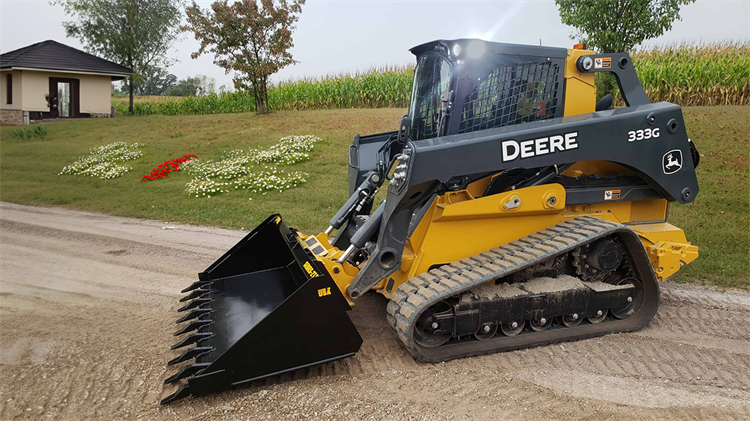
- Compact Track Loaders (CTLs): These utilize rubber tracks instead of tires. The tracks and the heavier, reinforced undercarriage can add anywhere from 500 to 1,500 pounds to the machine’s overall weight compared to a similarly-sized wheeled model. CTLs offer better stability and superior flotation on soft ground.
2. Attachments and Accessories
Any attachment you connect to the skid steer’s universal quick-hitch will significantly increase its total weight. This added weight is critical, as it directly reduces the amount of material the machine can safely lift (its effective ROC).
| Common Attachment | Approximate Weight Added |
| Standard Dirt Bucket | 200 – 400 lbs |
| Pallet Forks | 150 – 350 lbs |
| Hydraulic Breaker | 600 – 700 lbs |
| Heavy-Duty Brush Cutter | 1,000 – 2,000 lbs |
3. Fuel and Fluids
The operating weight of a skid steer includes a full tank of fuel, hydraulic fluid, engine oil, and coolant. These fluids add substantial weight that must be accounted for, especially when nearing capacity for transportation.
4. Cab Enclosures and HVAC
Skid steers with a full cab enclosure, glass windows, and a heating and air conditioning (HVAC) system are heavier than models with an open canopy or Roll-Over Protection Structure (ROPS). While these features improve operator comfort, they add weight.
5. Counterweights
Manufacturers may offer optional counterweight kits, which are heavy steel plates added to the rear of the machine. These are designed to increase the machine’s total weight, which in turn increases the tipping load and the Rated Operating Capacity (ROC), allowing the skid steer to lift heavier loads safely.
Operating Weight vs. Shipping Weight: Why the Distinction Matters
When you look at a skid steer’s specifications, you’ll encounter a key term: Operating Weight.
Operating Weight=Base Machine Weight+Full Fluids+Standard Bucket+Operator
This is the weight of the machine in its fully operational state and is the most important number for job site performance.
A less common term is Shipping Weight or Dry Weight. This is the weight of the new machine with no fluids (no fuel, no oil, no hydraulic fluid) and without a bucket or operator. This number is mostly irrelevant for real-world use but is sometimes listed in sales brochures.
Why the Operating Weight is Critical:
- Lifting Capacity: A heavier operating weight often means a higher ROC. The machine’s weight acts as a counter-balance to the load in the bucket.
- Transportation: You must use the Operating Weight (plus the weight of any attachments and the trailer itself) to calculate your total Gross Combined Weight Rating (GCWR). This ensures your tow vehicle and trailer can safely handle the load. Exceeding your towing capacity is dangerous and illegal.
- Ground Pressure: Lighter skid steers are better for finished lawns or sensitive areas where you want to minimize soil compaction and damage.
Conclusion: Matching Weight to the Job
The weight of a skid steer is not a fixed number; it’s a dynamic specification that changes based on its size class and configuration.
| Your Need | Recommended Skid Steer Weight Class |
| Tight access & turf protection | Small-Frame (3,000 – 6,000 lbs) |
| Versatility & all-around work | Medium-Frame (6,000 – 8,000 lbs) |
| Heavy demolition & maximum lift | Large-Frame (8,000 – 12,000+ lbs) |
| Soft/uneven ground | Compact Track Loader (Heavier overall, better flotation) |
Before you buy or rent, always check the manufacturer’s Operating Weight specifications, factor in your heaviest attachment, and confirm your towing setup can safely manage the load. Choosing the right skid steer weight is the key to safe, efficient, and profitable operations on any job site.