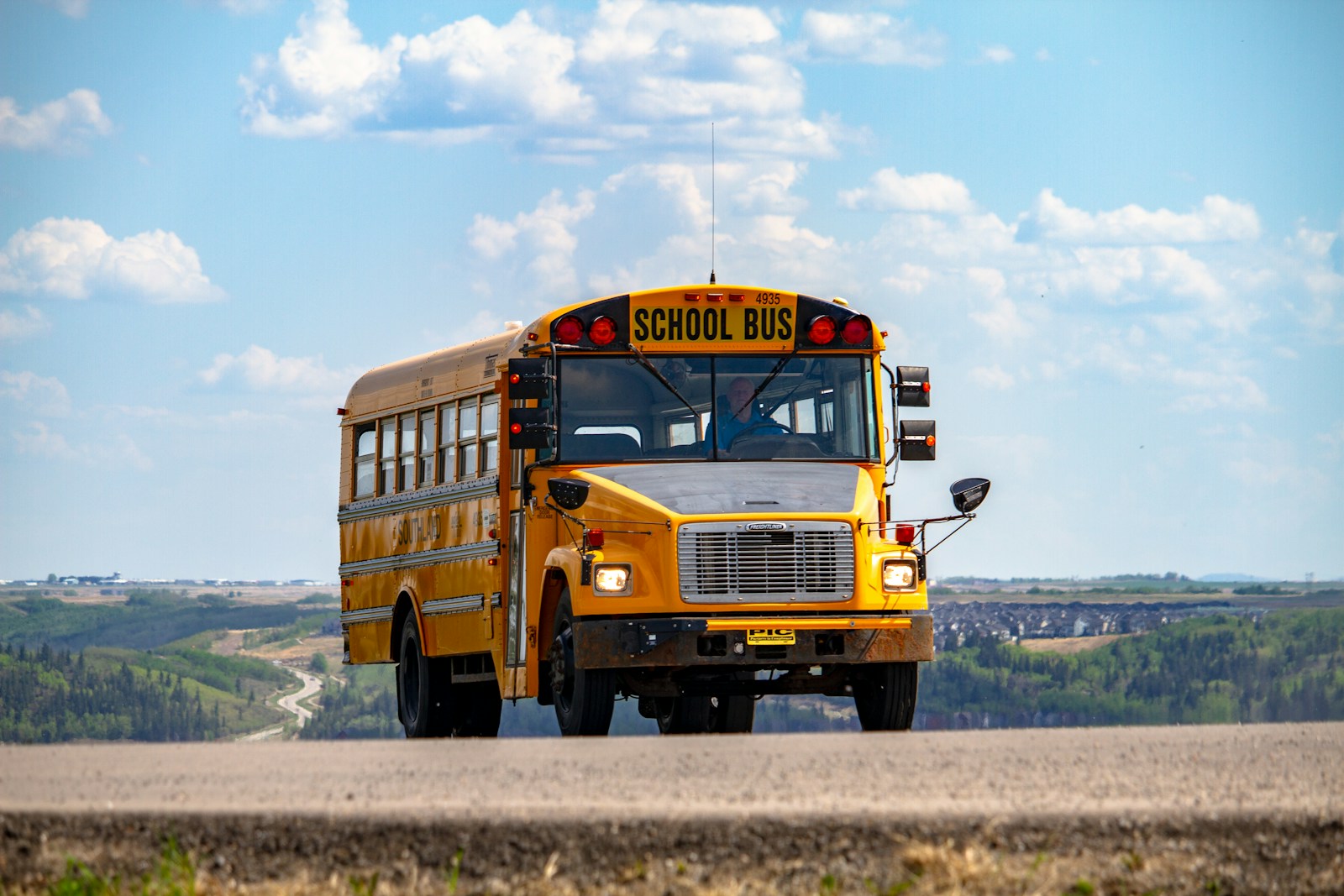
Why Don’t School Buses Have Seatbelts? (And What Keeps Our Kids Safe?)
It’s a question every parent has pondered while watching their child board that big, yellow vehicle: Why don’t school buses have seatbelts?
In a world where seatbelts are mandatory in virtually every other vehicle, their absence on the school bus seems counter-intuitive. Is it an oversight? A cost-saving measure? The answer, as is often the case in safety engineering, is complex, rooted in decades of research, unique vehicle design, and a highly effective, passive safety system you’ve probably never heard of.
This comprehensive guide will unbuckle the mystery, explain the primary safety mechanism at work, and explore the ongoing debate about seatbelt requirements on school buses.
The Primary Protection: Compartmentalization
The single biggest reason large school buses (those over 10,000 pounds) do not universally require seatbelts is the established, passive safety system known as compartmentalization.
This isn’t a simple lack of belts; it’s an intentional design strategy mandated by the National Highway Traffic Safety Administration (NHTSA) since the late 1970s. Compartmentalization essentially turns the seating area of the school bus into a series of protective, energy-absorbing “cells.”
How Compartmentalization Works
The concept is simple yet brilliant, functioning much like an egg carton protecting eggs during transit:
- High, Energy-Absorbing Seatbacks: School bus seats are designed with extra-high backs and are filled with thick, energy-absorbing padding.
- Close Seat Spacing: The seats are placed very close together. This small distance ensures that in a frontal collision, the child’s body moves forward only a short distance before making contact with the padded seatback in front of them.
- Strong Seat Construction: The seats and their anchorages are built with incredibly strong frames, designed to withstand significant crash forces and absorb the impact of the children being thrown against them.
In a crash or sudden stop, the high, padded seat in front of the student acts as a cushion, distributing the crash forces across the student’s entire upper body, minimizing the risk of a single-point impact injury (like whiplash or head trauma). Because it requires no action from the passenger—no buckling up—it is a passive safety system that works 100% of the time.
The School Bus Advantage: Size and Weight
Beyond compartmentalization, the sheer physics of the school bus itself provide a powerful layer of crash protection. School buses are not built like passenger cars; they are massive, rigid vehicles.
- Weight and Mass: School buses are significantly heavier than the average passenger vehicle. According to the laws of physics, in a collision between a large, heavy object (the bus) and a smaller, lighter object (a car), the heavier object sustains less damage, and the occupants of the heavier vehicle experience much less force.
- Riding High: Students sit significantly higher off the ground than in a car. This higher seating position means that in a crash with a typical vehicle, the impact is often absorbed by the bus’s frame below the passenger floor, further protecting the students.
- Strict Safety Standards: School buses are the most regulated vehicles on the road, adhering to stringent federal safety standards covering everything from body strength and rollover protection to fuel system integrity.
Statistically, riding a school bus is one of the safest ways for a child to travel. Data consistently shows that students are significantly safer on a school bus than riding in a family vehicle.
Why Seatbelts Have Been Historically Opposed
While the debate over seatbelts is ongoing, safety experts and regulators have historically pointed to several key drawbacks concerning their universal implementation on large buses.
1. Risk of Misuse and Injury
A seatbelt only works effectively when worn correctly. This presents multiple challenges on a bus full of dozens of children:
- Improper Placement: Younger children may wear a lap belt too high, across the abdomen instead of low across the hips. In a crash, this can lead to severe internal injuries, a phenomenon known as “submarining.”
- Torso Whiplash: Early research focused on lap-belt only systems suggested that while the lower body was restrained, the upper body could whip forward with greater force, increasing the risk of head and neck injuries against the seat in front. (Modern three-point belts address this, but lap-only belts are a non-starter.)
2. Evacuation Challenges
In the event of a rare emergency like a fire or rollover, rapid evacuation is critical. Adding seatbelts on school buses introduces a critical safety concern:
- Delayed Egress: An unbuckled child can immediately exit. A child who is frightened, injured, or unfamiliar with the seatbelt mechanism—especially in a dark, overturned, or smoke-filled bus—could experience dangerous delays.
- Driver Responsibility: A single school bus driver cannot reasonably ensure that every child is unbuckled and safely moving toward an exit in a chaotic, time-sensitive emergency.
3. Cost and Capacity Concerns
The financial and logistical impact of a national mandate is also a factor:
- Higher Costs: Installing three-point lap/shoulder belts increases the initial cost of a new bus significantly.
- Reduced Seating Capacity: The added width and mechanism required for proper three-point safety restraints can slightly reduce the number of students a bus can safely carry, potentially increasing the number of buses needed and thus the overall operational cost.
The Modern Shift: The Rise of Three-Point Belts
The debate is far from over, and the consensus is evolving. In fact, many experts and advocacy groups now support the use of modern three-point (lap-and-shoulder) seatbelts.
In 2015, the head of the National Highway Traffic Safety Administration (NHTSA) stated that every child on every school bus should have a three-point seatbelt.
Key Factors Driving the Change:
- Rollover and Side-Impact Protection: Compartmentalization is incredibly effective in frontal and rear crashes (the most common types). However, in rare rollover or severe side-impact collisions, a seatbelt can prevent a student from being fully ejected or thrown violently from their protective compartment.
- State Mandates: A handful of states—including California, Florida, New Jersey, New York, and Texas—have passed laws requiring new large school buses to be equipped with seatbelts, most commonly the three-point system.
- Small Buses are Different: Federal regulations already require lap/shoulder belts on all small school buses (under 10,000 pounds). This is because small buses lack the mass and size advantages of their larger counterparts, making traditional car-style restraints necessary for adequate protection.
The Best of Both Worlds?
The newest safety designs, such as those that use integrated three-point belts, are engineered to work in conjunction with compartmentalization, preserving the integrity of the passive system while adding an active layer of restraint. These systems also often feature belt-minder technology to help drivers monitor usage.
The Final Takeaway on School Bus Safety
The question “Why don’t school buses have seatbelts?” highlights a critical truth: School bus safety is about much more than just a belt.
For decades, the engineering of the big yellow bus has relied on compartmentalization—a robust, passive system of high, padded, and closely-spaced seats—combined with the vehicle’s massive size and weight, making it statistically the safest way for children to travel.
While the trend is slowly moving toward the inclusion of modern three-point belts in some regions to address rare-but-severe crash scenarios, parents can rest assured: the absence of a seatbelt on a large school bus is not a safety deficit, but rather a reflection of a meticulously engineered and proven system designed specifically to protect their children on their daily ride.